
Athletes still debate whether to play multiple sports or specialize
December 5, 2025 by Nate Astalos, Arizona State University
Nathaniel Astalos is an ASU Cronkite School of Journalism student assigned to cover Skyline High School for AZPreps365.com
For a high school athlete, life can be particularly hectic during the entire school year.
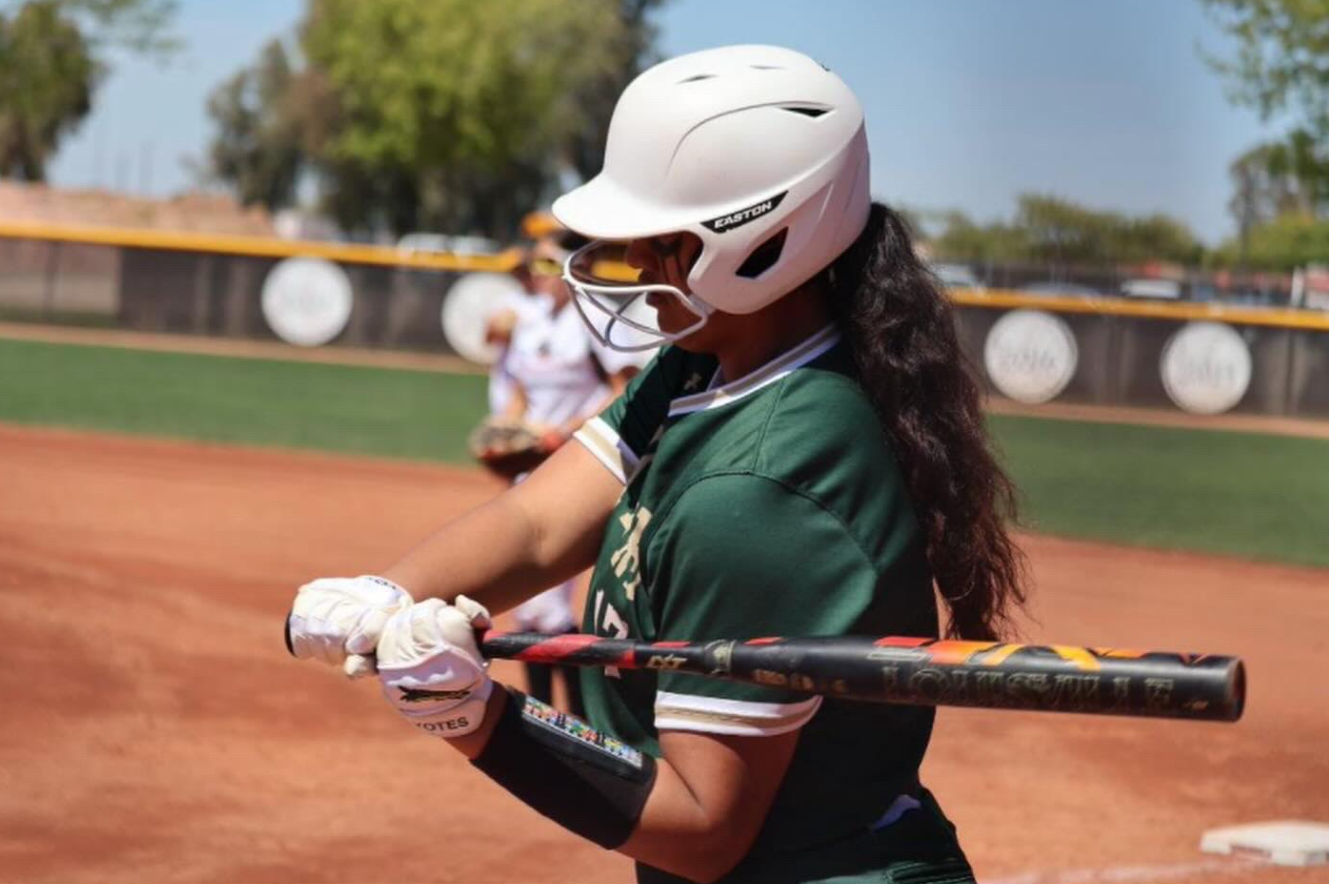
Skyline High School junior Jordan Seiuli, a multi-sport athlete in girls basketball, girls volleyball, and softball, knows this firsthand.
“I don’t have a lot of time to do my outside hobbies or hang out with my friends,” Seiuli said.
Despite this immense workload between school and athletics, Seiuli said that there is something special in it for her.
“It keeps my body moving in different ways that make me stronger both mentally and physically,” Seiuli said.
For some high school athletes, the question of whether to specialize in one sport or play multiple is a big decision for their future careers.
That journey could start their freshman years or even earlier, Kristen Seiuli, Jordan's mom, said.
Those who choose to play multiple sports can benefit from increased overall athletic performance, a lower likelihood of overuse injuries, and the creation of bonds with others. But they also must battle with a jam-packed schedule, protecting themselves from burnout and not being able to focus on just one sport at a time.
Those who believe athletes should play multiple sports tend to say that using different muscles will help protect against injuries.
“Injuries among sports-specialized kids are most often from overuse,” certified strength and conditioning coach Scott Sahli said.
A Sportzwire.com study analyzing NBA first-round draft picks from 2008 to 2015 found that only 25% of high school multi-sport athletes sustained a major injury during their NBA careers, compared to a much larger 43% of single-sport athletes.
On top of that, multi-sport athletes sustained only 10 reported injuries across all categories, while single-sport athletes racked up a staggering 116 injuries.
Basketball is not the only sport in which overuse injuries happen, though. In football, offensive and defensive linemen are constantly bending their knees, loading up pressure on their knees and ankles when aggressively pushing off the ground to block or tackle during games and practices.
Skyline senior defensive lineman Alex Rodriguez understands this well.
During the last game of his junior season, he tore his PCL. Then, he sprained his ankle during senior season summer camp and sprained his MCL during the first game of his senior season.
There is a chance it could have been prevented and possibly related to overuse.
Rodriguez is a single-sport specialized athlete who has only played football in high school after competing in flag football at previous school levels.
 Skyline flag football team (photo courtesy of Adam Schiermyer)
Rodriguez said he has played football for a majority of his life, meaning he has been making the same football-oriented movements, not allowing his body to recover. He figured his could likely have played a major role in his series of injuries.
Although there are more injuries than just those that come from overuse, it does tend to make up a large portion of injuries at the high school level.
The most recent data related to overuse injuries is found in a study conducted by the National Institute of Health, starting with the 2006-2007 school year and ending with the 2018-2019 school year. This study found that for both boys and girls, separated by grade year, over 20% of all injuries reported were attributed to overuse.
The lowest percentage of overuse injuries was 20.8% and the highest was 29.2%. With a staggering average of 73% of overuse injuries are reported to have happened during a practice.
Instead of using the same muscles and parts of their bodies all year long,Multi-sport athletes have the benefit of using different areas, allowing their bodies the time to rebuild from the repetitive sports movements of the past seasons.
Especially when an athlete is in multiple seasons at once, it allows the body the time it needs to recover by using different muscle groups on a day-to-day basis.
“Rest is so important as an athlete,” Jordan Seiuli said.
Players are not the only ones who see rest as an important factor for multi-sport athletes.
Skyline football head coach Adam Schiermyer used the analogy of bench press to describe this concept of overuse and the importance of switching it up, allowing the body time to rest. He said those who bench press every day are increasing their likelihood of hurting all of the muscles involved in that movement.
“Why would the same not apply to sports movements?” Schiermyer said.
Because of this, he believes that being a multi-sport athlete is beneficial.
Not only does it help to mitigate the risk of injuries, Schiermyer said, specifically overuse injuries, but it also makes these students better all-around athletes. This is something that can come in handy later on down the line.
Injuries are not the only thing to consider when student-athletes are making their decision.
“I just think they need to think about the benefit of playing multiple sports,” Schiermyer said. “It’s similar to training, just being really diverse in everything that you do. I really think it helps an athlete develop overall.”
Managing a busy day is another factor that is extremely important to consider.
“I have to distribute my time and just mainly get my work done in class,” Seiuli said.
Seiuli has a packed schedule during sports season, which means little to no time to do schoolwork and having to find creative ways to get it completed on time.
“(It’s) usually just school, practice, game, home, sleep,” Seiuli said.
Another downside of playing multiple sports is the inability to focus on one sport constantly.
“It is a lot harder to practice on another sport fully when you are focusing on your current sport,” Seiuli said.
This leads to not being able to prepare ahead of time for sport-specific skills for the next season.
However, Rodriguez said that he felt it was beneficial for him to play only one sport.
“Only focusing on football made me become better and faster,” Rodriguez said. “Rather than having to switch to another sport, taking time off and then having to get used to it again.”
Like Seiuli, Rodriguez purposefully did not want to have to deal with this kind of schedule.
“I want my free time, too,” Rodriguez said.
The ability for him to keep his free time was a major factor in Rodriguez’s decision to only play football during his high school years.
This also protected him from possible burnout, another huge factor in the decision to play one sport or multiple.
Despite their being a chance for burnout to enter the equation, Seiuli said she thrives in the busy schedule by feeding off of the love for those around her. The bonds that she has built are what she strives for.
“I think that what kept my head up for this basketball season was because of the amazing people I love to be around,” Seiuli said.
Not only does she love the people she plays with and uses that love to enjoy the times spent with them even more, but she also finds her home as a special place.
She believes that having a place to feel safe and talk to her parents, who are former athletes, is beneficial for her. She uses this to create deeper relationships with those around her.
“My refuge is always going to be my home and family,” Seiuli said.